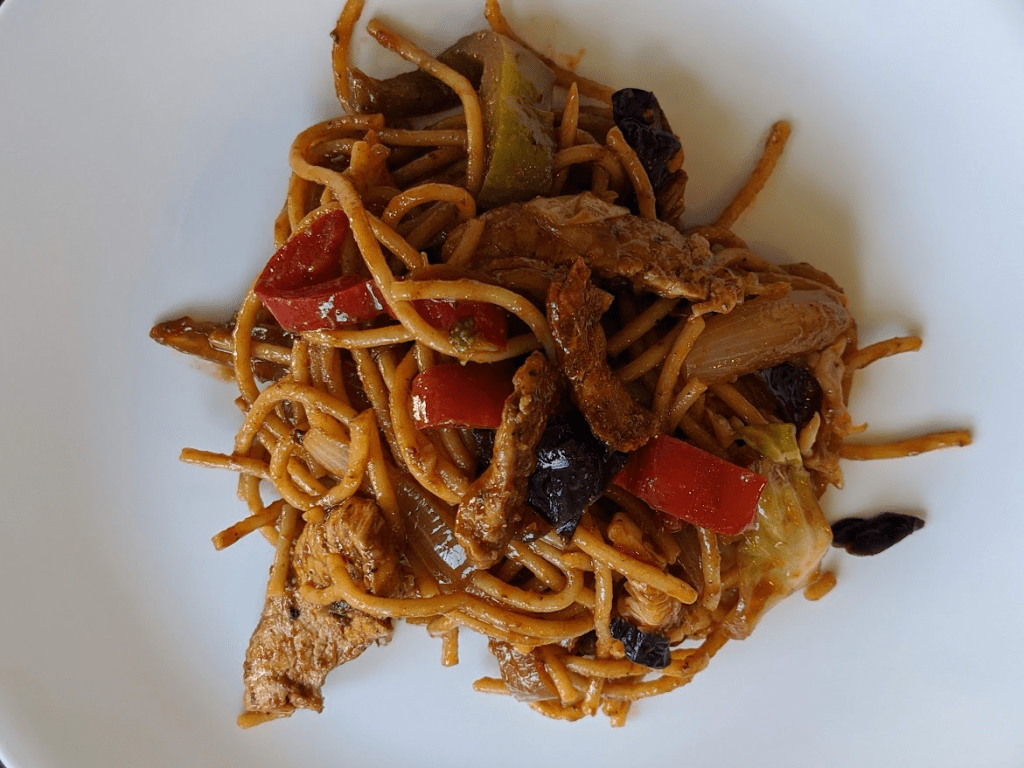
Tallarin Saltado
(Peruvian Creole Noodle Stir Fry)
Recipe by Chef Freyka
Before I indulge you in the secrets for making the best Tallarin Saltado recipe, allow me to tell you a few remarks about the biggest admirer of this dish – my daughter, Marcela. Half the time by text and the other half through the sweet intonation of her voice over a phone call, where she conveys her cravings with such excitement that it lights up my heart. Other times, she is more assertive, with a demanding, tone – which, I must admit, can be rather amusing. Marcela has a unique way of selecting our Sunday lunches or dinners, her cravings, and her cravings bring back memories about my younger self, many moons ago, when I used to plead and even engage in playful and nonplayful arguments with her to finish her meals. It’s remarkable how she’s transformed from a discerning eater with a long list of ‘no, I don’t like that’ to the passionate food enthusiast she is today. Though, she still doesn’t eat pork, beef, or seafood (she actually became allergic to the last), she will eat almost anything that can be done with chicken instead. Jiji.
Tallarín Saltado is a flavorful and satisfying fusion dish that reflects the blending of Chinese and Peruvian Creole Cusine (Comida Criolla). It’s beloved by many and is a great representation of the multicultural nature of Peruvian cuisine! if you’re interested in learning more about the origins of this dish, you can find additional information in my Lomo Saltado recipe
I’m not one for going around the block to engage you in the recipe. If you’re here, it’s likely because you want to dive right into the recipe. I always advise you to read the Chef’s Notes, if any, so that you can understand the reasons behind the madness—meaning, the ‘why’ of things. I’ve found that understanding the ‘why’ behind a recipe has helped me successfully execute dishes I’ve never made before. Feel free to let me know if you have any questions!
Serves 2
Ingredients:
- 4 oz. Spaghettis, bronze-die cut style, Cooked
- 12 oz. Flank steak Sliced medium-thin against the grain or, Chicken cut into strips
- ½ medium Yellow onion Sliced into medium wedges
- ½ medium Red onion Sliced into medium wedges
- 1 large Roma tomatoes Seeded/cut into medium wedges
- 1/4 each. Orange peppers, thinly sliced, (instead of thinly sliced Peruvian hot-yellow pepper)
- Cooking oil As needed
- Kosher salt To taste
- Fine ground pepper To taste
- ½ tsp. Cumin
- ½ tsp. Oregano Crushed
- 1 tsp. Smoked paprika
- ½ tbsp. Paste garlic
- 2 tbsp. Hot yellow pepper paste Recipe included
- 2 tbsp. Tomato paste
- 2 tbsp. Soy sauce
- 2 tbsp. Ginger extract
- 1 ½ tbsp. Red wine vinegar
- 2 tbsp. Pisco
- Water As needed
- 2 tbsp. Parsley/cilantro Chopped
- Huancayna sauce, for serving (see recipe in blog)
Directions:
Before you embark on this culinary journey with Tallarin Saltado, ensure all the ingredients are cooked, prepped, chopped, and measured.
- Prepare the pasta, meat, and vegetables as directed. (cook pasta al dente)
- Combine a medium pinch of salt, ground pepper, cumin, crushed oregano, and smoked paprika. This mixture is our Lomo Saltado seasoning and will be used throughout the stir-fry cooking process.
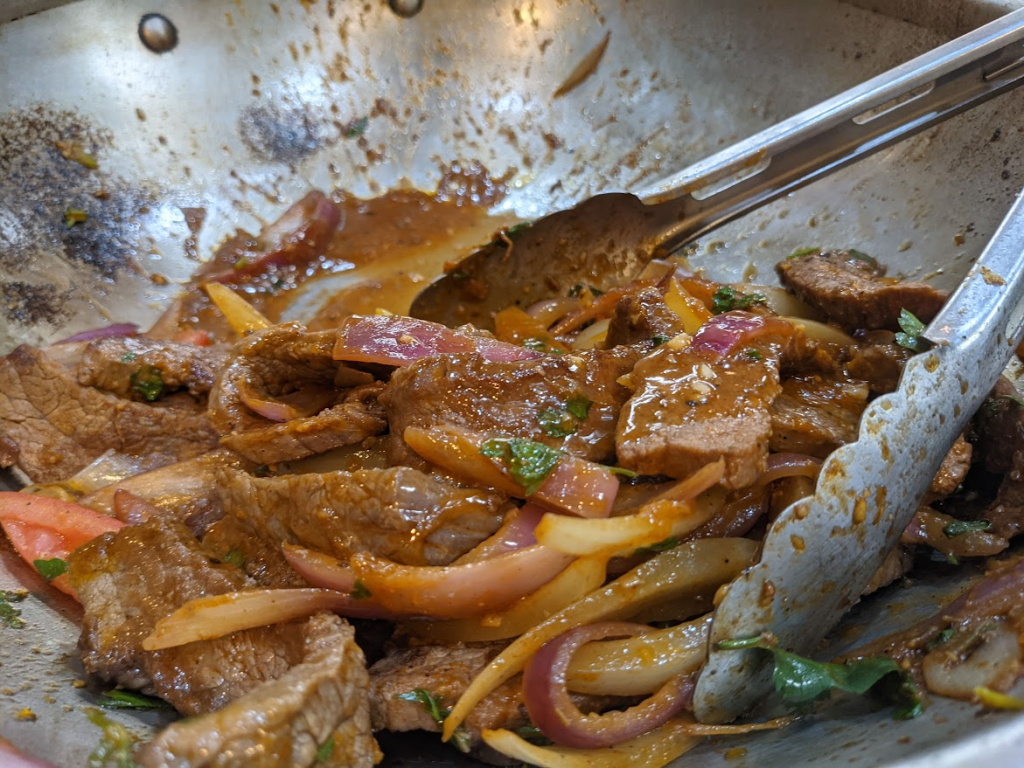
- Preheat a large, shallow sauté pan or wok over high heat. Add the cooking oil and heat it through. Place the beef/chicken in the pan, ensuring that the pieces do not overlap. Quickly season the meat with the “Lomo Saltado” seasoning. When the meat starts releasing some of its juices, flip the pieces and count to 30 seconds for beef and a bit longer for chicken, about 2 minutes, until the chicken is cooked through. Give the pan a vigorous toss to make the meat jump. Optionally, you can use Pisco to deglaze the pan. Set the cooked meat aside.
- Heat the sauté pan again over high heat, add the oil, and heat it through. Add the onions and season them. Sauté until the onions turn a nice golden color. Quickly, stir in the garlic until it becomes fragrant. Add the hot yellow pepper paste, tomato paste, soy sauce, and water if needed to make the stir fry a bit more juicy. Optionally, you can use Pisco to deglaze the pan.
- Add the tomato wedges, orange pepper slices, and vinegar, continuing to saute the “Saltado” to evaporate the vinegar slightly, just like 30 seconds.
- Return the cooked beef to the sauté, along with the cooked pasta, and roughly chopped cilantro and parsley, stir-fry pan and combine. Add some water, 1/4 of a cup should do the trick, to create juices from what’s stuck in the pan, a good sign is just a bit of juice that sort of clings to the pasta, not wet
- Garnish with parsley and have some Huancayna sauce on hand to accompany this dish, each person should add the Huancayna, if desired.
Chef Notes
- Noodles: The dish typically features stir-fried noodles, often using spaghetti or linguine, although other types of noodles like fresh egg pasta or Bucatini work well too.
- Proteins: It can include various proteins like beef, chicken, or shrimp, with beef being a common choice. The meat is thinly sliced and stir-fried with vegetables.
- Plant-Based Option: For a plant-based version, consider using Portobello mushrooms, tofu, or soy-vegetable steak as excellent replacements.
- Vegetables: Common vegetables used in Tallarín Saltado include Roma tomatoes, bell peppers, red, white, or yellow onions, and sometimes green onions. These vegetables are stir-fried alongside the protein.
- Flavorings: The stir-fry is seasoned with soy sauce, vinegar, and various spices, including garlic and ginger, creating a savory and slightly tangy flavor profile. Aji Amarillo, a Peruvian yellow chili pepper, is a traditional ingredient, but you can omit it if you prefer a milder dish, especially if serving it to youngsters.
- Garnishes: Tallarín Saltado is often garnished with freshly chopped cilantro, parsley, or a combination of both.
- Serving: Serve the dish on a large platter for family-style dining or in individual pasta bowls. Consider serving it alongside Huancayna sauce for added flavor.
- Variations: Tallarín Saltado can vary from region to region and even from one restaurant to another in Peru. Chefs often incorporate their unique touches and variations, making it a versatile and adaptable dish.
 Chef Freyka's Kitchen