The roots of Menestrón trace back to Italy, where it was known as minestrone—a rustic, vegetable-laden soup that originated in Liguria, particularly the city of Genoa. The Genoese version was special: it was thick, hearty, and often finished with a spoonful of basil pesto, giving it a distinctive aromatic character. Traditionally, it was made with seasonal vegetables, beans, and sometimes pasta or rice, whatever was available in the kitchen. It was a dish of the people, tied to the rhythms of the season. See this reference table for a fun on word meaning on different places:
When Italian immigrants, especially those from Genoa, arrived in Peru in the late 19th and early 20th centuries, they brought their beloved soup with them. But as it made its way into Peruvian kitchens, it began to transform.
In Peru, menestrón took on a life of its own. Local ingredients like choclo (Peruvian corn), yuca, and pumpkin were added. The dish became heartier, often incorporating beef, ham hocks, or both, depending on the household. While the basil and pasta were retained, they were layered with Andean flavors, reflecting the creativity and adaptability of Peruvian home cooks. The result was a uniquely Peruvian-Italian fusion, thicker and more stew-like than its Italian ancestor.
In many families, Menestrón Peruano became a Sunday or special occasion meal, shared around large tables. It symbolized comfort, abundance, and the blending of cultures—Italian tradition simmered slowly with Peruvian soul.
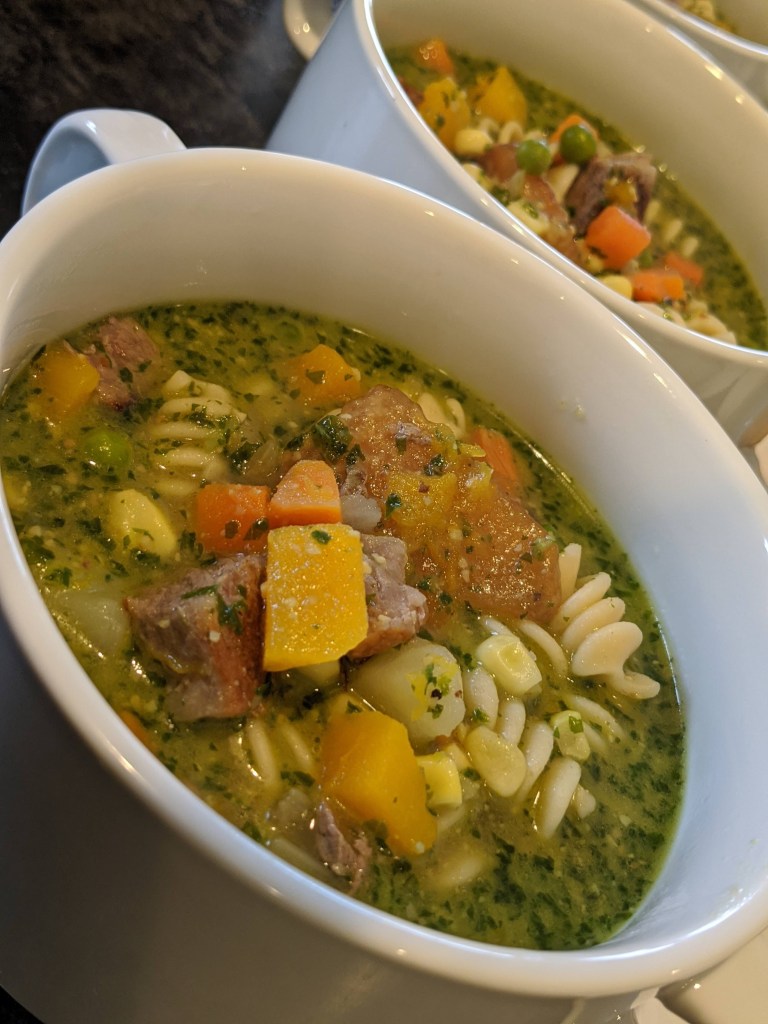
Peruvian Italian Minestrone
This hearty winter soup has its roots in Italy’s Liguria region, particularly in Genoa, where it is traditionally finished with a swirl of pesto. In Peru, the dish evolved with local flair—some families use ham hocks as a base, others use both ham hocks and beef. My mother’s version was made with only beef.
Recipe by Chef Freyka
Serves 8-16 (depending on serving size)
Ingredients:
- 2 lb. Chuck beef
- Kosher salt, as needed, to taste
- 1 medium Yellow onion, small diced
- ½ cup Parmesan rinds
- 4 Bay leaves
- 2 inches Daikon, small diced
- 1 tbsp. Garlic
- 8 cups Broth (vegetable, chicken, or beef – ham hock with beef is ideal) (water if nothing is available)
- 4 medium Yukon potatoes, diced large or 2 large Russets
- 2 small Carrots, small diced
- 1 large Peruvian corn (if available)
- 1 cup Green beans, cut into 1-inch pieces or 1 cup Fresh Fava Beans or Green Lima Beans
- 1-2 cups Cabbage, medium sliced
- 1 medium Red bell pepper, medium diced
- 1 small Banana squash, medium diced
- 1 small Zucchini squash, medium diced
- 1 tbsp. Dried oregano, crushed
- 1 tbsp. Garlic
- 8 oz. Pasta (optionally cooked ahead, if soup is not served right away)
- 8 oz. Dry Cannellini or Lima beans (garbanzos are also welcome in my home)
- 1 cup Pesto
- Parmigiano Reggiano, for serving
Directions:
- Heat a small amount of oil in a large pot over medium-high heat and sear the beef pieces until browned on all sides. Once they’ve taken on a deep color, remove them and set aside. In the same pot, add the diced onion, bay leaves, and a pinch of salt. Sweat the onions gently until soft, then let them caramelize just a bit. Stir in the garlic and daikon and cook until aromatic.
- Return the seared beef to the pot, add the parmesan rinds, and pour in your chosen broth. Let it all simmer gently for about an hour and a half, or use a pressure cooker to tenderize the beef in around 30 minutes.
- Once the broth is rich and the meat tender, add the carrots, potatoes, Peruvian corn, cabbage, and green beans. Let the soup cook for another 15 minutes or so, just until the vegetables are softened.
- Meanwhile, heat a separate sauté pan over high heat with a little olive oil. Sauté the zucchini, bell pepper, and banana squash with a touch of salt, pepper, and garlic. Cook until just sizzling and slightly tender but still bright in color. Remove from heat and set aside.
- Return to the soup pot and stir in the pasta, cooked beans, and banana squash (if it wasn’t sautéed). If the soup has thickened too much, add a bit more broth or water to keep everything happily swimming. Simmer gently until the pasta is cooked through.
- Right at the end, fold in the pesto and bring the soup to a final soft boil. Taste and adjust the seasoning with salt and pepper. Just before serving, stir in the sautéed vegetables. This last-minute addition keeps their texture intact and gives the soup a beautiful layered bite.
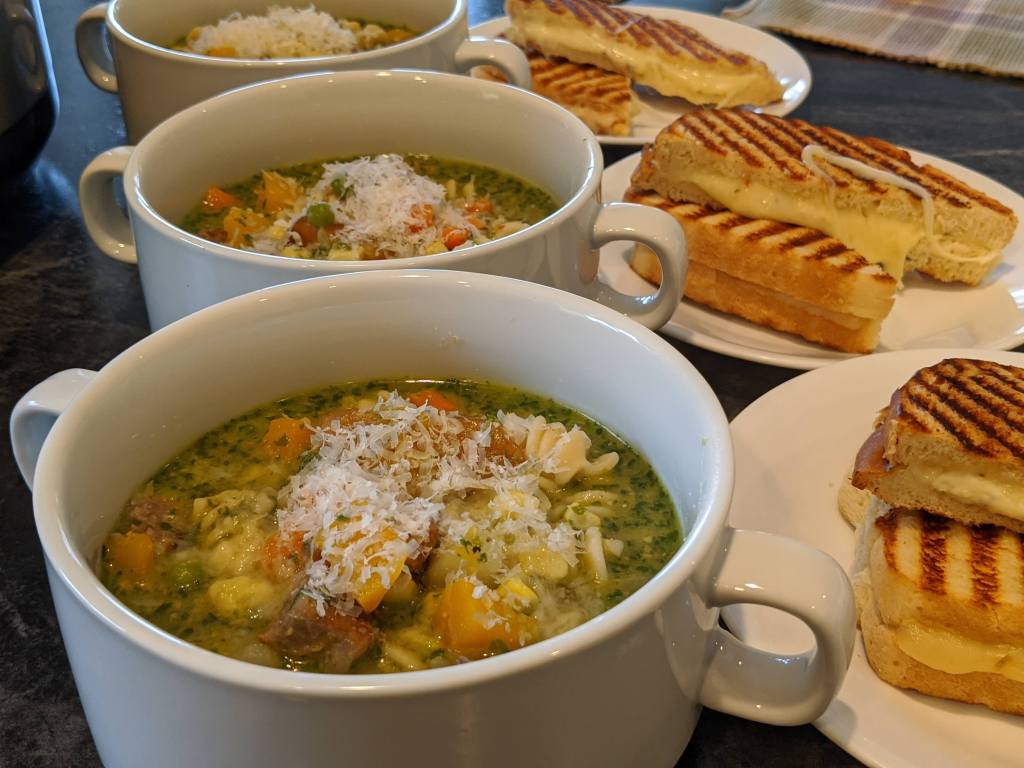
- Ladle into warm bowls, top with freshly grated Parmigiano Reggiano, and serve with a slice of crusty bread for the full experience.
 Chef Freyka's Kitchen